Why is my car leaking water from the front? The answer may be harmless condensation, rainwater, windshield-washer fluid, or engine coolant. A clear puddle beneath the passenger side often comes from the air-conditioning evaporator. The U.S. Environmental Protection Agency identifies condensate as a normal byproduct of vehicle air-conditioning operation. However, location alone cannot confirm the source.
Look closely before driving away. Clear, odorless fluid is usually less concerning. Green, orange, pink, or blue liquid may indicate coolant or washer fluid. Coolant often feels slightly oily and can smell sweet, but never taste or handle it casually. A hot engine can spray pressurized coolant across the front grille. That creates a burn risk. Check the temperature gauge, reservoir level, radiator area, hoses, and water-pump region only after the engine cools.
Small leaks deserve attention. AAA’s 2024 Your Driving Costs report estimates average annual maintenance, repair, and tire expenses at roughly $1,500 for typical drivers. Preventive inspection can cost less than repeated overheating damage. NHTSA recall records also show that fluid leaks can appear in safety-related defect descriptions, although not every leak signals a recall. A technician should pressure-test the cooling system and inspect the air-conditioning drain, radiator, hose connections, and washer reservoir. The first diagnosis may be wrong. Puddles spread across splash shields and can mislead even experienced owners. If the fluid is colored, the engine overheats, the warning light appears, or the leak grows, stop driving and arrange a professional inspection.
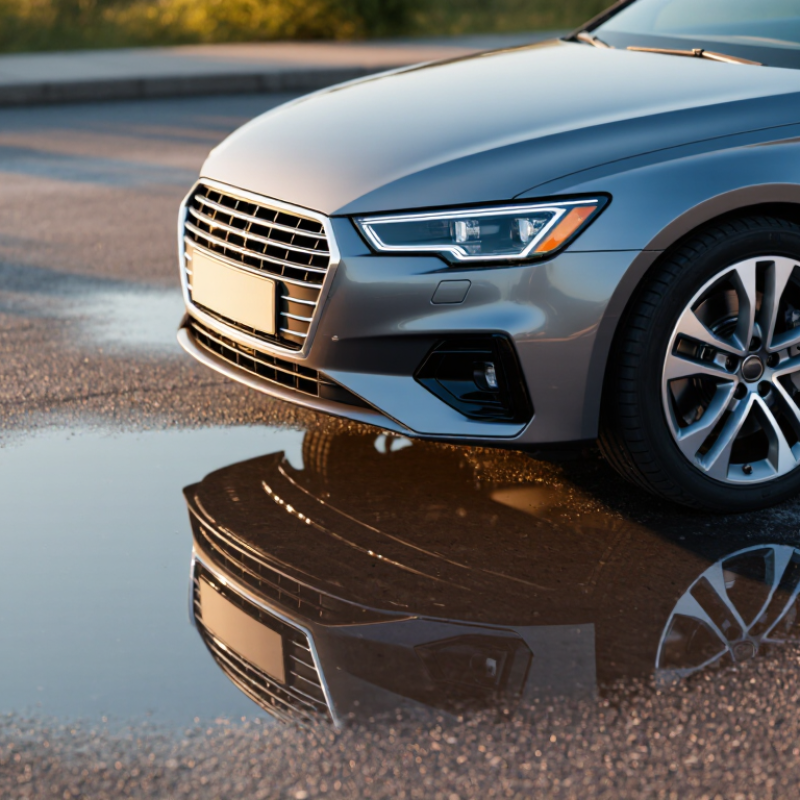
Why Is My Car Leaking Water From the Front?
A clear puddle beneath the front of your car is often normal air-conditioning condensation. Moisture collects on the evaporator and drains through a small tube. On a humid day, the puddle may look surprisingly large. Rainwater can also run from the hood, grille, or underbody after parking. It should be clear and nearly odorless.
Other fluids need closer attention. Coolant may appear green, pink, orange, or yellow, depending on the vehicle. It often smells sweet and feels slightly slippery. A damaged hose, radiator, thermostat housing, or water pump can release it near the front. Windshield washer fluid may have a blue tint and a noticeable cleaning smell. Brake fluid is usually oily, and it requires urgent professional inspection. I have seen drivers call every clear puddle a leak. That assumption can delay repairs.
Tips: Place clean cardboard under the engine overnight. Check the puddle’s color, smell, and location in the morning. Do not touch unknown fluid with bare hands. Check the coolant level only when the engine is cold. Never open a hot cooling-system cap. If the temperature gauge rises, steam appears, or the fluid feels oily, stop driving and arrange a qualified inspection. A small mistake here can become an expensive one.
Why Is My Car Leaking Water From the Front?
A small puddle under the front may be harmless condensation. After using the air conditioner, clear water often drips near the passenger side. It should feel like plain water, have no strong smell, and disappear quickly on warm pavement. Rainwater can also collect beneath the vehicle. My first guess is not always right, though. A quick look can mislead.
Tips: Place clean cardboard under the car overnight. Note the puddle’s color, smell, thickness, and exact location. Clear, odorless liquid usually suggests condensation. Green, pink, orange, or blue fluid may indicate coolant. Coolant can smell sweet and feel slightly slippery. Brown or black fluid may be engine oil. Reddish fluid could be transmission or steering fluid. Never taste any fluid. Check the coolant reservoir only when the engine is completely cold.
Watch what happens next. A coolant leak may leave crusty marks around hoses, the radiator, or the reservoir. Rising temperature, steam, a sweet cabin smell, or a warning light makes the leak urgent. Stop driving if the temperature gauge climbs. An overheating engine can suffer severe damage. If the liquid is unclear, arrange a professional inspection. Even experienced drivers misidentify fluids in dim light. Take a photo, mark the puddle’s position, and record when it appears.
How to distinguish harmless air-conditioning condensation from a potentially harmful fluid leak.
When water appears beneath the front of your car, inspect the underside before guessing. Park on dry pavement and note the exact drip location. A clear, odorless puddle near the passenger side may come from the air-conditioning drain. This is usually normal, especially after humid driving. Check the pavement shortly after using the cooling system. The water should feel like plain water, not slippery or oily.
Look behind the front bumper, under the radiator, and around the lower engine cover. Use a flashlight to inspect wet seams, hoses, clamps, and plastic tanks. Coolant may appear green, pink, orange, or blue, depending on its formulation. It often has a sweet smell and feels slightly slick. Never touch a hot cooling system. Let the engine cool fully first. I once blamed an air-conditioning drain, but a loose hose had spread fluid across the same area. Drips can travel.
Inspect the ground again after moving the car a few feet. Fresh drops reveal the source better than old stains. Look for white crust, damp fasteners, or a narrow trail from above. The radiator’s lower corners deserve attention. So does the water pump area behind the belt cover. A dry spot can mislead you. Wind and underbody panels may redirect fluid several inches. If the liquid is colored, oily, or rapidly increasing, avoid driving until a qualified technician checks it. Even clear water can hide a deeper leak when it appears with overheating, steam, or a sweet odor.
Why Is My Car Leaking Water From the Front?
A clear puddle beneath the front of your car is often harmless air-conditioning condensation. It usually appears after using the cooling system. The liquid feels like plain water and has no strong smell. Still, do not assume every clear leak is safe.
Park on level ground and place clean cardboard under the engine bay. Check the color, thickness, and location of the drip. Coolant may look green, pink, orange, or yellow, depending on the vehicle. It often feels slightly oily and may have a sweet smell. Never taste it. Keep children and pets away. Washer fluid can also appear near the front, sometimes with a sharp cleaning odor. Oil usually looks brown or black, not clear. My first mistake was judging a leak by color alone; lighting can change what you see.
Only inspect the coolant reservoir when the engine is completely cool. A hot cooling system can release scalding pressure. Look for a low fluid level, wet hose connections, or crusty residue around the radiator area. Watch the temperature gauge before driving again. Rising temperature, steam, repeated dripping, or a growing puddle needs prompt professional inspection. A small air-conditioning drain may be normal, but coolant loss is not. If you cannot identify the fluid safely, avoid guessing. Photograph the puddle and note when it appears.
| Possible Fluid | Typical Appearance | Odor and Feel | Common Source or Location | Simple Checks | Safety and Urgency |
|---|---|---|---|---|---|
| Air-Conditioning Condensation | Clear and usually colorless; resembles plain water. | Normally odorless and not oily. | Often drips near the passenger-side area, especially after using the air conditioner or defroster. | Check whether the dripping occurs after air conditioning use. Place clean white cardboard under the drip to confirm that the liquid remains clear and water-like. | Usually normal. A small puddle can be expected. Investigate further if the liquid has an unusual color or smell. |
| Rainwater or Car-Wash Water | Clear water, sometimes containing dirt or soap residue. | Usually odorless and non-oily. | May collect around the front splash shield, bumper, underbody, or drain areas after wet weather or washing. | Consider when the vehicle was last driven in rain or washed. Observe whether the leak stops once the vehicle and ground are dry. | Usually harmless. Persistent water entry into the cabin or electrical areas should be inspected. |
| Engine Coolant | May be green, orange, pink, yellow, blue, or another color depending on the vehicle's coolant formulation. Some newer coolants can appear nearly clear. | Often has a sweet smell; feels slippery. Do not taste it. | Radiator, hose connections, thermostat housing, water pump area, expansion tank, or the front of the engine. | Only inspect when the engine is completely cool. Check the coolant level in the marked reservoir and look for colored residue around hoses or fittings. | Potentially urgent. Do not open a hot cooling system. Stop driving if the temperature gauge rises, steam appears, or the coolant level is very low. Coolant is toxic to people and animals. |
| Windshield-Washer Fluid | Often blue, but it may also be green, orange, pink, or nearly clear. | Usually watery; may have an alcohol-like or detergent smell. | Washer-fluid reservoir, pump, hose, or the front bumper area. | Activate the washer system briefly and observe whether the leak increases. Check the reservoir and visible hose connections. | Repair soon. The leak may reduce visibility if the windshield cannot be cleaned. Avoid skin or eye contact and never drink it. |
| Engine Oil | Amber to dark brown or black; thicker than water. | Oily and slippery, with a petroleum-like smell. | Oil pan, drain plug, oil filter area, valve-cover area, or front crankshaft seal. | Place white cardboard under the vehicle and check the engine-oil dipstick on level ground after the engine has been off for several minutes. | Inspect promptly. Stop driving if the oil-pressure warning light appears, the oil level is very low, or a large amount is leaking. |
| Transmission or Power-Steering Fluid | Often red, pink, brown, or amber; color varies with age and fluid type. | Oily and slippery; may have a distinctive petroleum odor. | Transmission pan, cooler lines, steering rack, pump, hoses, or the front subframe area. | Use clean cardboard to assess color and texture. Check the owner's manual before checking any reservoir or dipstick because inspection procedures vary. | Repair soon. Low fluid can affect shifting or steering. Do not rely on color alone to identify the fluid. |
| Brake Fluid | Usually clear to pale amber when fresh; it can become darker with age. | Thin, slippery, and mildly chemical-smelling. | Brake master-cylinder area, brake lines, calipers, or wheel areas. | Check the brake-fluid reservoir level without touching the fluid. Look for wetness near wheels or brake components and note any change in pedal feel. | Safety-critical. Do not drive if the brake pedal feels soft, the brake warning light is on, or a significant leak is suspected. Arrange professional inspection. |
| Fuel | Usually clear to pale yellow, though appearance varies by fuel type. | Strong, distinctive fuel odor; evaporates quickly and is not normally oily like engine oil. | Fuel lines, fuel rail, tank connections, or the front portion of the vehicle on some layouts. | Do not touch or test the liquid unnecessarily. Move away from ignition sources and note whether the odor is strong or increasing. | Emergency condition. Do not start or drive the vehicle. Move people away, avoid flames and sparks, and contact emergency or roadside assistance services. |
Safe identification tip: Park on a level surface, switch off the engine, allow hot components to cool, and place clean white cardboard under the suspected drip. Never taste an unknown fluid, reach under an unsupported vehicle, or remove a hot radiator or coolant-system cap.
A small puddle under the front of your car is not automatically a serious failure. Clear, odorless water often comes from the air-conditioning drain. It may appear after a humid drive and usually disappears within minutes. However, colored liquid, a sweet smell, or a greasy texture deserves attention. Coolant can look green, orange, pink, or yellow, depending on its formula. Washer fluid often smells strongly and feels watery.
Professional repair becomes important when the engine temperature rises, the coolant level drops repeatedly, or steam escapes near the grille. Never remove a hot pressure cap. Scalding coolant can cause severe injuries. A qualified technician can pressure-test the cooling system, inspect hose connections, and use ultraviolet dye when the leak is difficult to locate. The source may be a radiator, water pump, thermostat housing, or a damaged hose. Guessing can waste money.
The 2023 Your Driving Costs report estimated maintenance, repair, and tire expenses at 9.83 cents per mile. A neglected leak can increase that cost quickly. One overlooked detail matters: water dripping after parking may be normal condensation, but coolant loss is not. Check the pavement after several hours, not only immediately after driving. I would not rely on color alone; old fluids become misleading, and some leaks hide behind splash shields. Professional inspection is the safer choice when symptoms repeat.
Often, it is air-conditioning condensation. Moisture drains from a small tube near the passenger side. The puddle should be clear and nearly odorless. Rainwater may also collect underneath. Not always harmless.
Condensation feels like plain water and disappears quickly on warm pavement. Coolant may look green, pink, orange, or yellow. It can smell sweet and feel slightly slippery. Color alone fooled me once.
Yes. Washer fluid may appear near the front of the vehicle. It can have a blue tint and a sharp cleaning smell. A damaged reservoir or hose may cause repeated dripping.
Brown or black fluid may indicate engine oil. Reddish fluid can suggest transmission or steering fluid. These fluids usually look thicker than water. Do not identify them by color alone.
Park on level ground and place clean cardboard beneath the engine bay. Check the liquid’s color, smell, thickness, and exact location. Photograph the puddle in daylight. Dim lighting can mislead you.
No. Wait until the engine is completely cold. Never open a hot cooling-system cap. Pressurized coolant can cause severe burns. Keep children and pets away from unknown fluids.
Stop driving if the temperature gauge rises, steam appears, or the puddle grows quickly. An oily liquid also needs urgent professional inspection. Repeated dripping requires attention. Stop driving.
Avoid guessing or touching it with bare hands. Record when the puddle appears and mark its position. Arrange a qualified inspection if the fluid remains unclear. My first assumption may be wrong.
If you are wondering, “why is my car leaking water from the front,” the cause may be harmless condensation or a more serious fluid leak. Clear, odorless water beneath the front of the car, especially after using the air conditioner, is often normal. However, leaking coolant, oil, brake fluid, or windshield washer fluid can indicate a problem that needs attention. The color, smell, texture, and location of the liquid can provide useful clues, but fluids should never be tasted or handled carelessly.
To investigate safely, park on a level surface, turn off the engine, allow the vehicle to cool, and place clean cardboard beneath the front underside. Check around the radiator area, hoses, fluid reservoirs, engine bay, and air-conditioning drain. Look for wet spots, stains, cracks, or loose connections. If the liquid is colored, oily, sweet-smelling, or continues to leak, avoid driving until a qualified professional has inspected the vehicle. Prompt repair can help prevent overheating, brake problems, engine damage, or other safety concerns.

Sedo Auto