Oil pump failure can quietly damage an engine before the dashboard warning becomes impossible to ignore. Low oil pressure reduces lubrication across the crankshaft, connecting rods, camshaft, and hydraulic components. The result may be a faint ticking sound, a deeper knocking noise, or unusual metal particles in the drained oil. Sometimes, however, the pump is blamed too quickly.
This guide explains how to diagnose bad engine bearings from oil pump failure using measured evidence, not sound alone. A technician should begin with the correct oil level, viscosity, filter condition, and a mechanical oil pressure gauge. Compare readings with the manufacturer’s specifications at cold start and normal operating temperature. A worn pump, blocked pickup screen, leaking relief valve, or excessive bearing clearance can produce similar pressure symptoms.
Details matter.
For example, copper-colored flakes in the filter may indicate bearing damage, while a damaged pump may show scoring, gear wear, or pressure loss without severe debris. Removing the oil pan can reveal loose bearing material, but inspection should continue with clearance measurements and crankshaft checks. A bearing that looks acceptable may still have excessive clearance. That is an easy mistake.
Reliable diagnosis often requires service-manual procedures, laboratory oil analysis, and advice from an experienced engine specialist. Do not rely on a single warning light or one pressure reading. In some cases, the original failure remains uncertain because the engine was operated too long after pressure dropped. This guide also addresses those limitations, helping readers separate pump failure from bearing wear before replacing expensive parts.
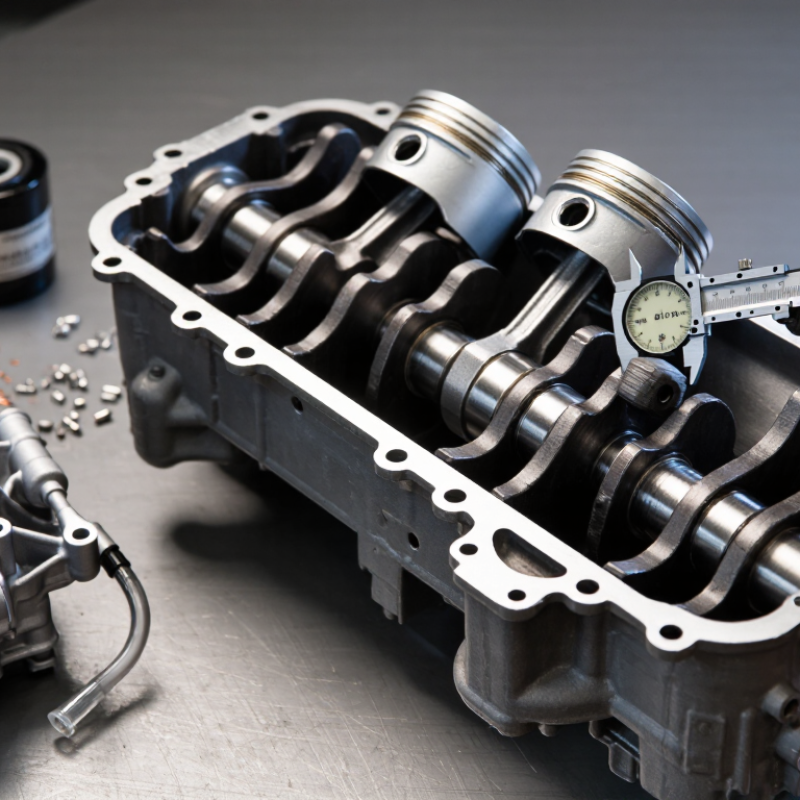
Oil Pump Failure Modes: Pressure Loss Below the Manufacturer’s Specification
Oil Pump Failure and How to Diagnose Bad Bearings
Oil pump failure becomes serious when measured pressure falls below the manufacturer’s specification. The engine may still run, but lubrication is already weakening. A pressure gauge connected at the specified test port gives better evidence than a warning lamp. Check pressure cold, then repeat after the engine reaches operating temperature. Record idle and raised-speed readings. Hot oil often exposes wear that cold oil hides. Listen for ticking, rattling, or deep knocking near the crankcase. These clues help, but they do not prove a failed pump.
Bad bearings can create similar pressure loss. Excessive clearance lets oil escape faster than the pump can maintain flow. Remove the filter and inspect it for metallic glitter, though clean oil does not guarantee safety. Verify oil level, viscosity, pickup-screen condition, and relief-valve movement before condemning the pump. A damaged pickup tube can imitate pump failure. So can a worn drive shaft. Measure clearances with approved tools and compare every result with service data. I have seen confident diagnoses change after one blocked pickup was found. That reminder matters: pressure loss is a symptom, not a verdict.
Tips: Use a calibrated gauge and a fully charged battery during testing. Keep the engine secure and avoid loose clothing near rotating parts. Never rely on one reading. If pressure remains below specification when hot, stop unnecessary running and arrange a qualified inspection. Photograph gauge readings and note oil temperature. Small details matter.
Diagnosing Oil Pump Failure: Pressure Below Specification
This representative diagnostic profile compares measured oil pressure with generic minimum service-reference values at different engine speeds. Persistent pressure loss across the speed range may indicate a worn oil pump, excessive bearing clearance, a blocked pickup screen, a leaking pressure-relief valve, or low oil level. Confirm the result with the engine-specific manufacturer specification and a calibrated mechanical pressure gauge.
Oil Pressure Testing: Apply the 10 psi-per-1,000-rpm Diagnostic Rule
Oil pump failure can starve an engine of lubrication, but low oil pressure does not always mean the pump is defective. Worn main or connecting-rod bearings can create excessive clearance, allowing oil to escape faster than the pump can maintain pressure. The result may appear as a faint knock, flickering warning light, or metallic debris in drained oil.
A reliable check uses a mechanical pressure gauge, not only the dashboard sensor. Install the gauge at the engine’s oil-pressure port, then warm the engine fully. Record pressure at idle and several engine speeds. The practical diagnostic rule is about 10 psi for every 1,000 rpm. At 3,000 rpm, approximately 30 psi may be acceptable, depending on the engine’s service specification. Always compare readings with that specification.
Listen carefully during testing. A deep knock that increases under load may suggest bearing wear, while unstable pressure can point toward a damaged pickup tube, blocked screen, relief-valve problem, or worn pump. Inspect the oil filter for shiny copper or silver particles. A clean filter does not prove the bearings are healthy. I have seen pressure readings look acceptable briefly, then fall sharply as the oil became hotter. That detail is easy to miss. Testing only at cold idle can create false confidence. Calibration errors, low oil level, and incorrect gauge connections can also distort the diagnosis.
Bearing Clearance Checks: Compare 0.001–0.003 in Typical Ranges
What Is Oil Pump Failure and How to Diagnose Bad Bearings?
An oil pump failure reduces lubrication, but worn bearings can create a similar low-pressure reading.
Bearing clearance is a critical diagnostic clue.
For many engine main and connecting-rod bearings,
0.001–0.003 inches
is a typical working range. Always verify the exact specification for the engine being tested. Designs, materials, and operating temperatures can change the acceptable limit.
Remove the bearing cap carefully and inspect the surface for
scoring, copper exposure, or uneven wear.
Measure the crankshaft journal with a micrometer, then measure the bearing bore with a dial bore gauge. Subtract the journal diameter from the assembled bore diameter.
Plastigage can provide a useful screening check, but it is less precise than calibrated measuring tools. Keep everything clean.
One grain of dirt can distort the result.
Cold measurements can mislead. Oil temperature, journal taper, and housing distortion also affect clearance. If clearance exceeds specification, oil may escape too quickly, lowering pressure at idle. The pump may still be working. I have seen technicians replace a pump before checking bearing clearance, which solves nothing when the crankshaft is worn. A loose pump shaft, damaged pressure-relief valve, clogged pickup screen, or cracked pickup tube can produce similar symptoms. Check pressure with a mechanical gauge and compare readings at cold start, operating temperature, and idle.
Document each measurement. Small errors matter.
Bad Bearing Symptoms: Use ISO 10816 Vibration Severity Guidelines
What Is Oil Pump Failure and How to Diagnose Bad Bearings?
Oil pump failure can develop quietly, but bearing vibration often gives an earlier warning. During a field inspection, I check vibration with the pump running at normal load and temperature. I record overall velocity, usually in millimetres per second RMS, at the bearing housings. Loose bolts, soft feet, pipe strain, and poor alignment can distort the reading.
ISO 10816 vibration severity guidelines help classify overall machine condition. The assessment depends on machine size, foundation stiffness, speed, and measurement location. A rising velocity trend deserves attention, even when the value remains below an alarm limit. Stable readings matter too. A sudden increase is rarely harmless.
Look for changes over time.
Bad bearings may produce rough noise, increased temperature, or visible oil contamination. Overall velocity can indicate worsening mechanical condition, but it cannot identify every bearing defect. I also compare horizontal, vertical, and axial readings. High-frequency acceleration or envelope analysis may reveal rolling-element damage earlier. A spectrum can separate bearing tones from imbalance or misalignment.
One reading can mislead me. I once treated a high value as a bearing problem before checking a loose mounting foot. The vibration dropped after correction. ISO 10816 should guide judgement, not replace it. Use the correct machine category and document speed, load, sensor position, and measurement direction. If vibration rises with temperature or lubrication changes, inspect the bearing, shaft alignment, coupling, and oil system together.
Conclusion
Oil pump failure occurs when oil pressure falls below the manufacturer’s specified range, reducing lubrication and increasing the risk of engine damage. A practical diagnostic approach begins with an oil pressure test, using the general guideline of approximately 10 psi per 1,000 rpm while also following the engine maker’s limits. If pressure remains low, inspect for worn pump components, restricted passages, leaks, or excessive bearing clearance. Typical bearing clearance is often around 0.001–0.003 inches, but the correct specification must always be confirmed for the specific engine.
To determine how to diagnose bad engine bearings from oil pump failure, combine pressure readings with operating symptoms such as knocking, overheating, unstable pressure, and abnormal vibration. ISO 10816 vibration severity guidelines can help assess whether vibration is within an acceptable range. A complete root-cause diagnosis should separate pump wear, oil blockage, and bearing damage rather than assuming that every low-pressure condition is caused by the pump.
 Sedo Auto
